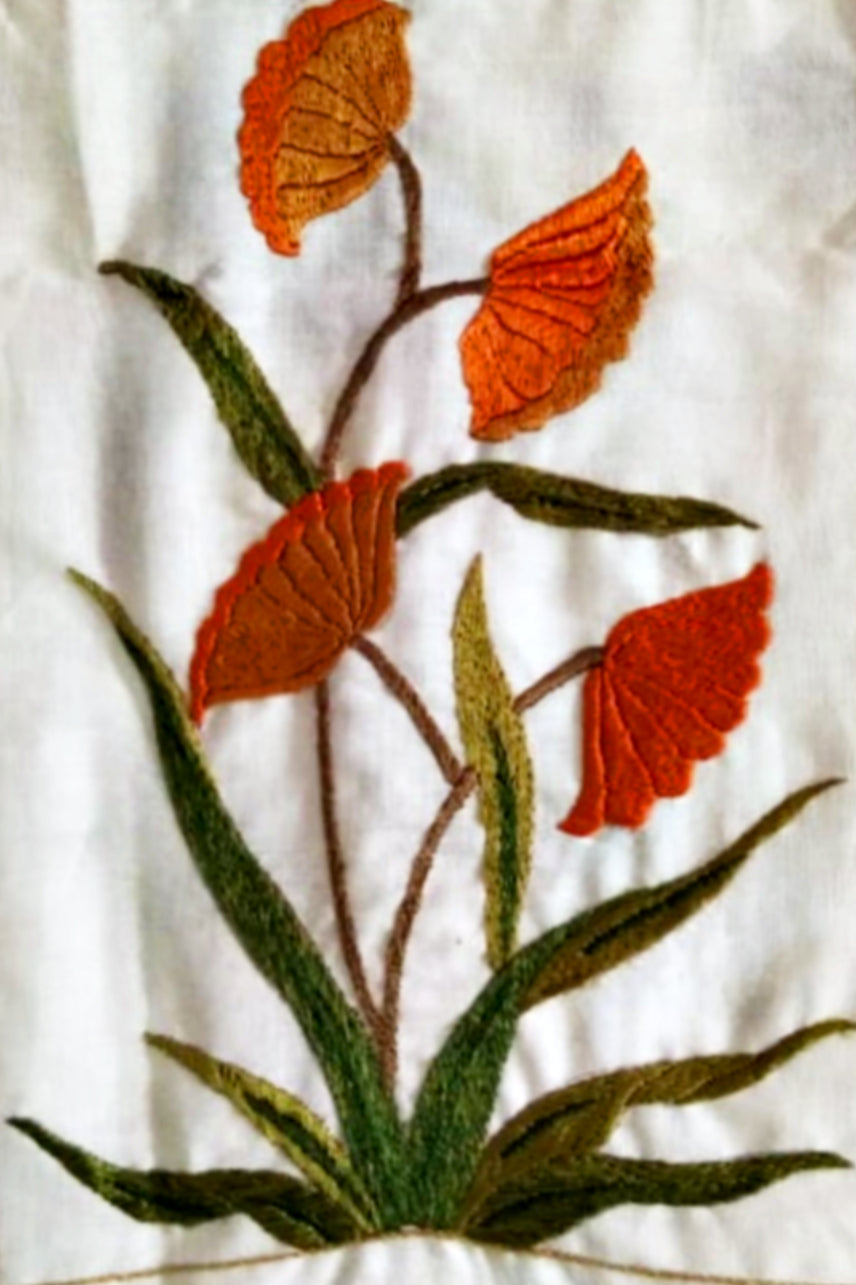
Chamba Rumal Embroidery
What is Chamba Rumal Embroidery?
Chamba Rumal is a GI-tagged unique double-sided hand embroidery technique from the Chamba district of Himachal Pradesh, recognised under the ODOP initiative, traditionally done on fine muslin or silk fabric using vibrant silk threads. Its defining characteristic is the flawless finish on both sides of the fabric, giving it the appearance of a painting rather than typical embroidery, which is why it is often described as the "painted handkerchief of Himachal."
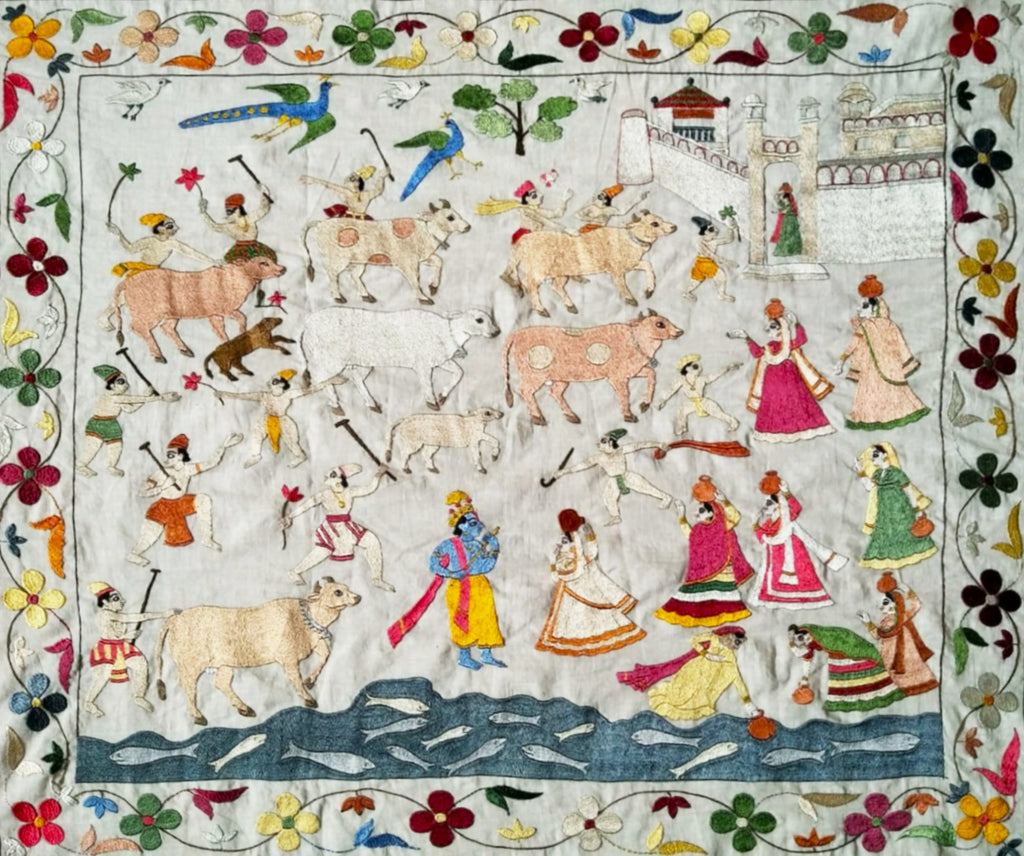
The artwork often depicts scenes from Hindu epics like the Ramayana and Mahabharata, as well as Radha-Krishna tales, making each Chamba Rumal motif not just decorative but also deeply symbolic.
Key Features of Chamba Rumal Embroidery
- Double-sided embroidery, where the design looks identical on both sides
- Worked in fine silk threads on a muslin or silk base
- Influenced by the Pahari miniature painting tradition
- Flourished under royal patronage in Chamba, Himachal Pradesh
- GI-tagged and recognised under the One District One Product initiative
- Motifs drawn from Hindu mythology, nature and courtly life
- History of Chamba Rumal Embroidery – A Royal Legacy
Origin of Chamba Rumal Embroidery
The Chamba Rumal dates back to the late 16th century, flourishing under royal patronage, particularly during the rule of Raja Umed Singh (1748–1764 A.D.). Originally gifted during weddings and religious ceremonies, these embroidered masterpieces symbolised auspiciousness, respect, and devotion, a history explored further in our blog on Chamba Rumal's needle, thread, and tradition, which notes that these rumals were exchanged between the families of the bride and groom as a symbol of goodwill during weddings.
Evolution of Chamba Rumal Embroidery
The style is influenced by the Pahari miniature painting tradition, with artists adapting its intricate line work into embroidery, creating a seamless blend of painting and textile craftsmanship. Over time, this brought Chamba Rumal beyond its original use as a wedding coverlet into a broader form of narrative embroidered art.
Contemporary Chamba Rumal Embroidery
Today, Chamba Rumal is kept alive by artisans in Himachal Pradesh working within documented family lineages. Anjali Vakil, one of the artists featured on MeMeraki, began her artistic journey after marriage, inspired by her mother-in-law Lalita Vakil, a National Award recipient for Chamba Rumal embroidery in 1993.
Chamba Rumal Themes and Motifs
Radha-Krishna and Mythological Narratives
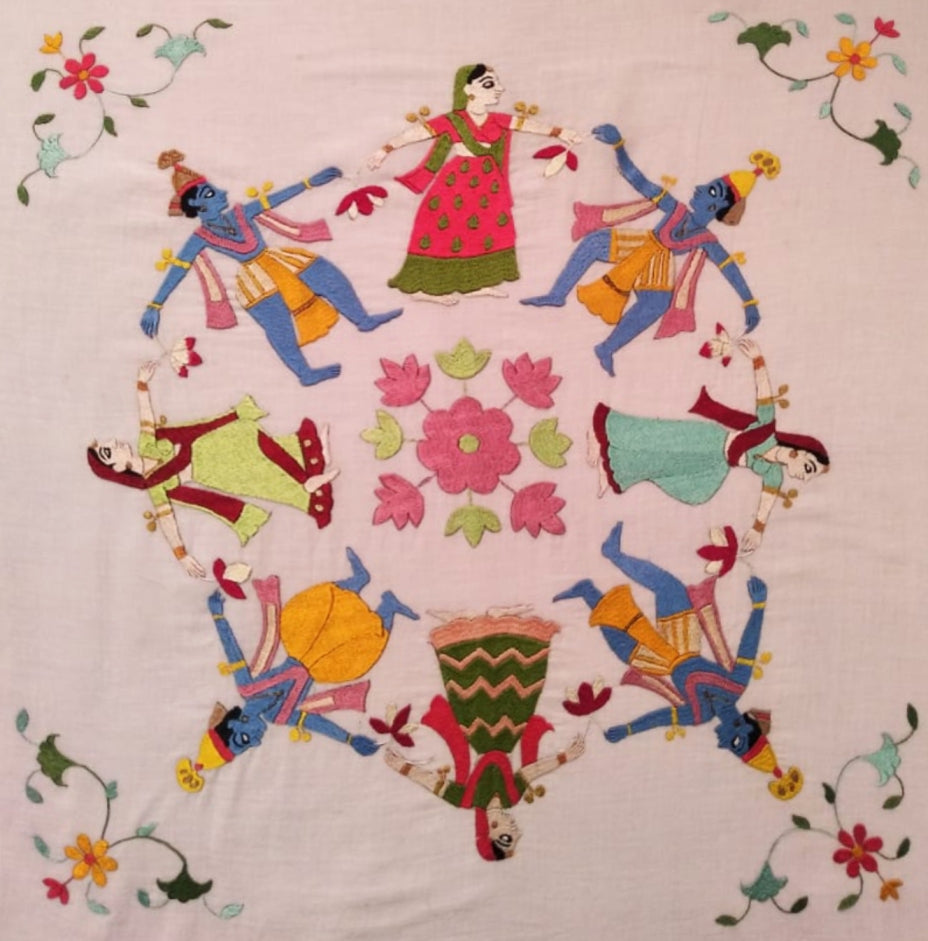
Chamba Rumals often feature narrative compositions, miniature scenes stitched with painterly detail, drawing on Ramayana and Mahabharata episodes as well as Radha and Krishna's divine love, a visual language explored in more depth in our blog on decoding the hidden symbolism in Chamba Rumal embroidery. On MeMeraki, this includes pieces such as Krishna with gopis, a Raas Mandal, and Radha-Krishna together, each rendered in the traditional do-rukha, or double-sided, satin stitch.
Deities in Chamba Rumal Embroidery
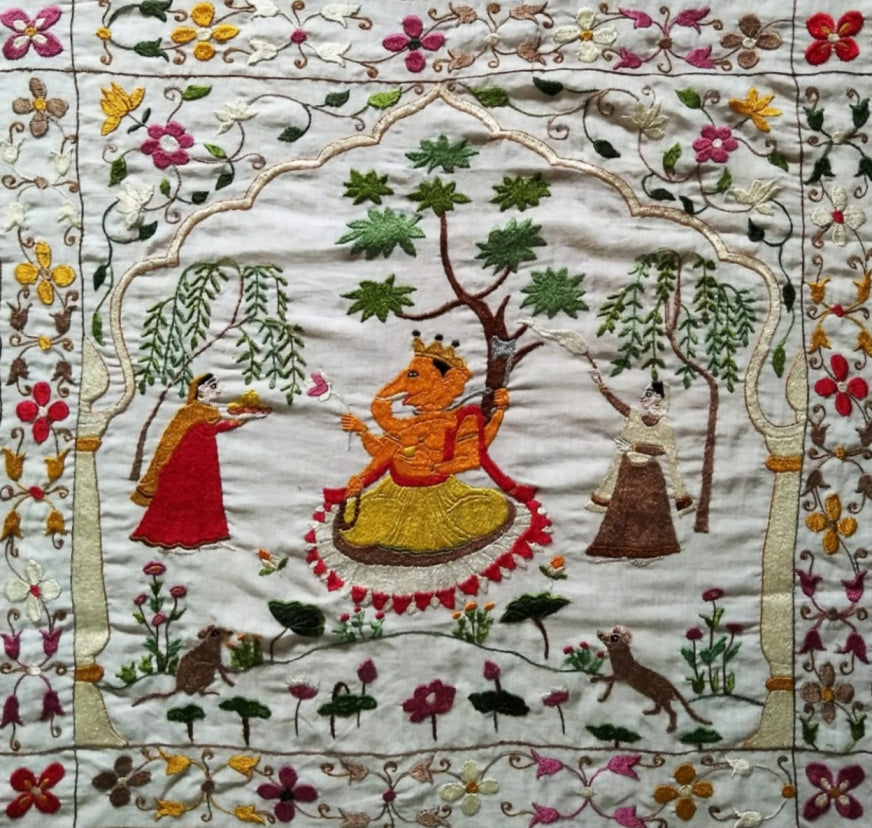
Devotional figures also appear independently of larger mythological scenes, including Ganesha, shown in pieces such as a Ganpati design seated beneath an embroidered tree with his mouse vehicle at his feet, and Shiva.
Floral and Nature Patterns
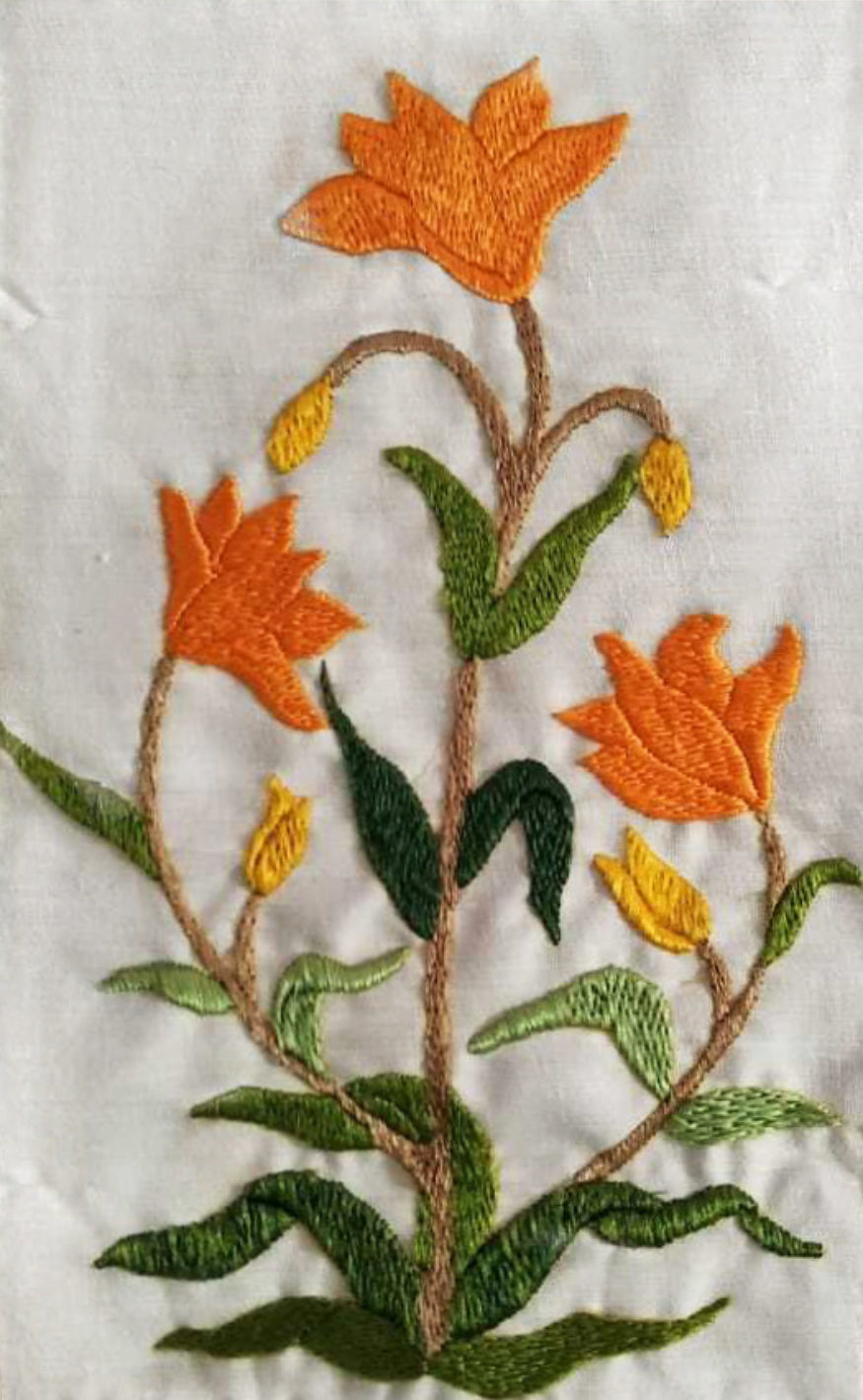
Floral and animal patterns are a recurring theme, with individual flower studies, such as orange blossoms or snowdrop flowers, and flowing floral arrangements embroidered in vibrant silk thread within a decorative border.
Royal and Courtly Patterns
Chamba Rumal also depicts royal processions and temple rituals, a theme rooted in the craft's history under courtly patronage, alongside pastoral scenes such as Godhuli, which centres on rural, village life with a divine touch.
Technique and Craftsmanship
Creating a single Chamba Rumal embroidery piece can take weeks or even months, depending on its complexity. Key elements of the technique include:
-
Double-sided embroidery: Both sides mirror each other perfectly, using the traditional do-rukha stitch.
-
Stitches used: Satin stitch, stem stitch, and buttonhole stitch.
-
Base fabric: Fine muslin, khaddar cotton, or silk.
-
Threads: High-quality silk threads in vibrant colours.
-
Motifs: Mythological, natural and cultural symbols.
- Each Chamba Rumal embroidery motif reflects precision, patience, and deep artistic understanding, passed down through generations of Himachali artisans.
Famous Chamba Rumal Artists
Anjali Vakil
Anjali Vakil is a Chamba Rumal artist from Chamba who began her artistic journey after marriage, stepping into a lineage of creative brilliance; her mother-in-law, Lalita Vakil, earned the 1993 National Award for Chamba Rumal embroidery. Using the traditional double-sided satin stitch, her work includes devotional scenes of Krishna, mandalas, and courtly compositions on cream-coloured khaddar cotton.
Heena
Heena is a Chamba Rumal artist from Chamba known for intricate floral and devotional compositions crafted on muslin cotton, including detailed depictions of Ganesha and pastoral scenes such as Godhuli, showcasing exceptional craftsmanship and attention to detail.
How to Identify Authentic Chamba Rumal Embroidery
-
Double-sided stitching: Look for detailed and symmetrical motifs that appear identical on both sides of the fabric, the defining feature of the do-rukha technique.
-
Silk threads on muslin or silk: Authentic pieces reflect the Pahari miniature painting style and are worked in silk thread on a muslin, khaddar cotton, or silk base.
-
Artist attribution: Buying from a platform that names the specific artist and provides a certificate of authenticity, as MeMeraki does, is the most reliable way to confirm a piece is a genuine, handmade Chamba Rumal.
Chamba Rumal Embroidery for Home Décor
Whether you're seeking a heritage textile, a cultural wall hanging, or a meaningful wedding gift, Chamba Rumal embroidery brings handcrafted elegance and a story in every thread into a home. Larger narrative pieces, such as a Raas Mandal or Ganpati composition, make elegant focal points in the living room, while smaller floral studies suit a bedroom, hallway, or study.
Gifting Guide for Chamba Rumal Embroidery
A Chamba Rumal is a perfect gift for weddings, housewarmings, or anyone who appreciates Indian craftsmanship and heritage, drawing on its own history as a piece traditionally gifted during weddings and religious ceremonies in Himachal Pradesh.
FAQs about Chamba Rumal Embroidery
What is Chamba Rumal embroidery known for?
Chamba Rumal is renowned for its double-sided embroidery, where the design looks identical on both sides. It features intricate scenes from mythology and nature, created using fine silk threads.
How do I identify an authentic Chamba Rumal?
Look for double-sided stitching, detailed and symmetrical motifs, and the use of silk threads on a muslin or silk base. Each authentic piece reflects the Pahari miniature painting style.
What is the typical Chamba Rumal price range?
Prices vary based on the complexity of the design, fabric used, and artist skill. Handcrafted Chamba Rumals on MeMeraki range from affordable pieces to premium heirloom works.
Where does Chamba Rumal embroidery come from?
Chamba Rumal embroidery originates from the Chamba district of Himachal Pradesh, with roots going back to the late 16th century.
Can I buy Chamba Rumal embroidery online from MeMeraki?
Yes, this collection lets you buy authentic Chamba Rumal embroidery online, including devotional, floral, and narrative pieces by artists Anjali Vakil and Heena, with worldwide shipping and an authenticity certificate included with every purchase.
Is Chamba Rumal suitable for home decor?
Yes. Chamba Rumal is well suited to home decor, with its double-sided stitching and mythological storytelling adding a heritage, painterly quality to interiors. Pieces can be displayed in living rooms, bedrooms, studies, or as part of a gallery wall.
Can Chamba Rumal be gifted?
Absolutely. A Chamba Rumal is a perfect gift for weddings, housewarmings, or anyone who appreciates Indian craftsmanship and heritage.
Show Less


 Backed By MeMeraki Promise
Authenticity • Safe Delivery • Easy Resolution
Backed By MeMeraki Promise
Authenticity • Safe Delivery • Easy Resolution